The PSTN switch-off now has a firm date and a very short runway. This week Openreach issued what it called a final warning to organisations still using legacy business lines: the old public telephone network closes on 31 January 2027, and around 44,000 ISDN and PSTN Multiline services are still in use across the UK.
What Openreach announced
Openreach said that hospitals, emergency services, councils, prisons, schools, universities and large corporate and industrial sites are among those with services still to move. Many of these lines do far more than carry voice calls. They can sit behind lift and fire alarms, hospital switchboards, care home call systems, alarm monitoring centres and equipment that monitors utilities and flood risks.
From 31 January 2027, some PSTN customers who have not moved to a modern digital service may be transferred to EVAc, a limited last-resort service that is designed only to keep essential calls available. Openreach was clear that ISDN and Multiline services are not compatible with that fallback, so they have to be migrated before the switch-off date. Its advice to organisations is to audit the estate now, bring property, IT and facilities teams together, and speak to the communications provider and equipment suppliers.
BT has published similar guidance. It points out that traditional phone lines also carry alarms, EPOS machines, door entry systems, CCTV links and fax machines, and that broadband which relies on a traditional line may need to change too. Earlier Openreach guidance also lists building access controls, automated gates and door entry units among the equipment that can still depend on copper.
Where a hidden line can sit in a building
The risk Openreach highlights is not the main office phone. It is the forgotten line in a plant room or comms cupboard that nobody has looked at for years. In commercial buildings that usually means one of the following:
- Door entry and intercom panels that dial a mobile or desk phone over an analogue line.
- Intruder and fire alarm communicators that report to a monitoring centre.
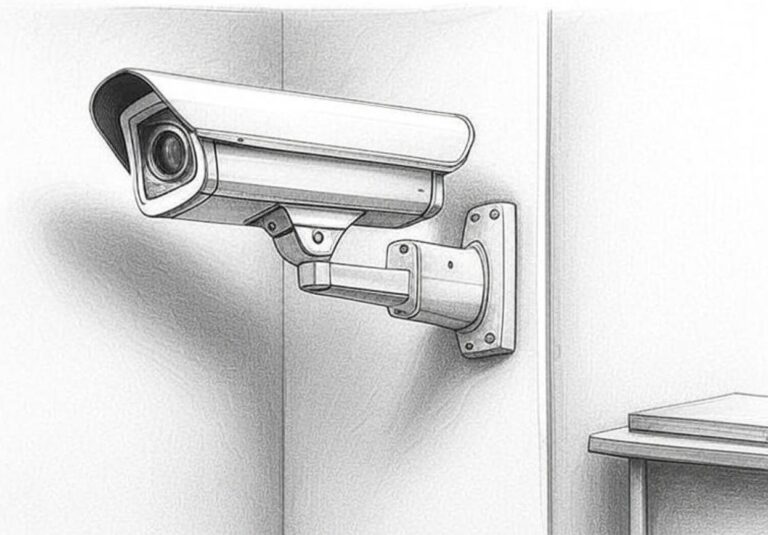
- CCTV and remote monitoring that depends on an ADSL connection for remote viewing or alerts.
- Lift emergency phones and auto-diallers.
- Card payment terminals and other point-of-sale equipment.
- Gate controllers and building management systems with a dial-up or analogue link.
What the PSTN switch-off means for businesses
For most offices the switch to a modern VoIP phone system is straightforward. The harder work is in the building systems that were installed years ago and never documented. A practical approach for the next eight weeks looks like this.
- List every line. Ask your provider for a full list of numbers and compare it against what you know. Any line you cannot match to a phone or system needs investigating.
- Trace what each line feeds. Walk the comms rooms, risers and plant rooms. Label the line, the device and the supplier who maintains it.
- Decide the replacement for each device. Many modern door entry, alarm and CCTV products can use an IP network or a mobile data connection instead of a phone line, but older units may need replacing or a new communicator.
- Plan the network and power. Digital voice and IP-connected devices need a reliable network, and they rely on mains-powered equipment. Unlike a copper line that carried its own power, a router or switch will not work in a power cut unless there is battery backup. This matters most for life-safety systems.
- Test before the cut-over. Ask your suppliers to test call-outs, alarm signalling and remote access on the new connection before the old line is cancelled.
Security systems deserve particular attention. A door entry system that cannot call a phone, or an alarm that cannot signal, is a problem on day one. If your CCTV or access control uses a telephone line for remote access or alerts, ask the installer how it will connect after the switch-off and whether the network around it is ready. Our guides to access control systems and video surveillance for business premises explain how these systems depend on the network.
Why the network matters more than the phone line
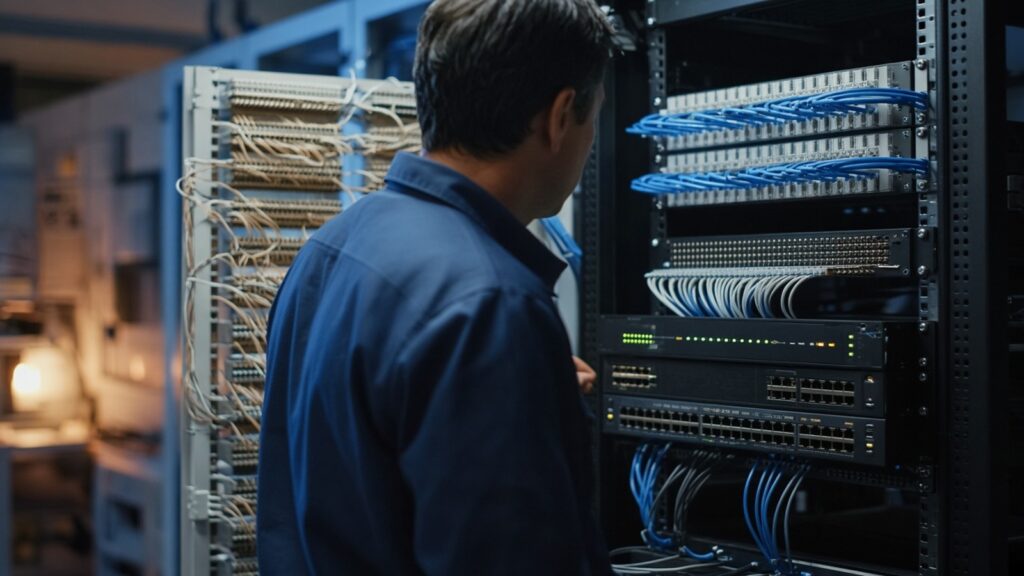
Moving to digital services shifts the weight onto your own infrastructure. Voice, door entry, cameras and Wi-Fi all share the same cabling and switches, so the quality of that infrastructure decides how reliable the new setup feels. Good structured cabling, correctly sized PoE switches and a tidy comms room are what make an IP phone or an IP camera behave. If coverage is the issue, a small cell DAS or properly designed business Wi-Fi can keep staff and guests connected where desk phones used to be.
DigitalBay designs and installs telecom installation and IT network infrastructure, and can support the systems that sit on it. The line migration itself is ordered through your communications provider, but we can help to survey the building, identify which AV, security and telecom devices depend on legacy lines, and plan the cabling, power and network changes around them. If you also need ongoing maintenance and support after the move, we can set that up at the same time.
If you are unsure which of your systems still rely on a legacy line, send us a short brief with the building address and the systems you have, and we will help you work out what needs to change before the deadline.